Update From The God Himself - Dr. Takashi Tsuji

Joxy

Experienced Member
Reaction score
519

The organoid project​

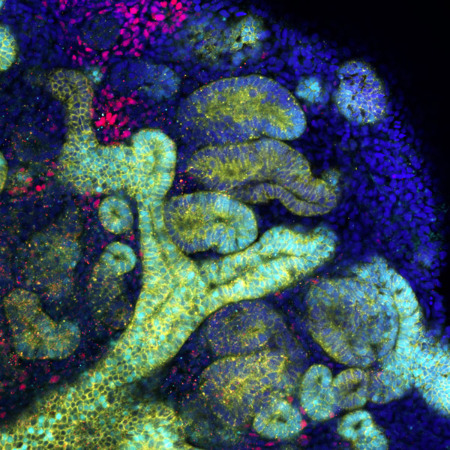
We’re entering an era where developmental biologists alone can’t solve forthcoming organoid challenges. The Organoid Project is a consortium that brings together RIKEN researchers and external collaborators to tackle organoid challenges and find real-world applications. In addition to developmental biologists, the Organoid Project includes researchers and technicians with expertise in areas such as microdevices, 3D printing, biomaterials and bioinformatics. This positions us uniquely to become a world-class base for generating organs in 3D.
Research under the Organoid Project spans the four key phases that take us from basic research to real-world applications: research on the self-organization mechanisms in stem cells; designing organoids; long-term culture and maturation; and optimization for applications.
Developmental biologist Mitsuru Morimoto and I work on the earlier phases of this process at RIKEN’s Kobe campus. Here, Morimoto’s team has succeeded in developing human lung alveoli organoids in the lab, which are now being used to model and develop treatments for lung diseases, such as pulmonary fibrosis, a scarring of the lungs.
His team has also elucidated the cell–cell communication signaling in the foregut, the top end of the esophagus, the stomach, and a portion of the duodenum, which is the embryonic origin of the trachea and esophagus. They have used these findings to develop tracheal cartilage tissue from human pluripotent cells. His group is now collaborating with the Center for Stem Cell and Organoid Medicine (CuSTOM) at Cincinnati Children’s Hospital Medical Center in the United States to create a multiple organoid system that replicates the respiratory organs and esophagus.
Meanwhile, my team has established a method for generating kidney and bladder organoids from human induced pluripotent (iPS) cells. The kidney organoids have all the components of a nephron, the functional unit of the kidney. The bladder organoids exhibit a barrier function that holds urine in a way similar to the bladder, and we have also been able to replicate the muscle layers surrounding the bladder, which help hold and release urine.
However, a new frontier for organ regeneration is to replicate entire organ systems instead of standalone organs. From a surgical point of view, transplanting a whole urinary tract system instead of a kidney organoid alone could increase the likelihood of a transplant being successful. My team is working to connect organoids of the kidney, bladder and ureter, which connect the kidneys to the urinary bladder, to replicate the urinary system.
A challenge is that the urinary system connects organs, tissues and cells derived from two of three types of cell layers, called germ layers, formed in the third week of human embryonic development. The relevant cells here are from the endoderm—which develop into the inner linings of the body, such as the digestive system and bladder—and from the mesoderm, which develop into the kidney, muscles, and red and white blood cells, among other things. The connections at the kidneys and bladder are a rare point where these two types of tissues connect, and replicating this connection would be a major feat.

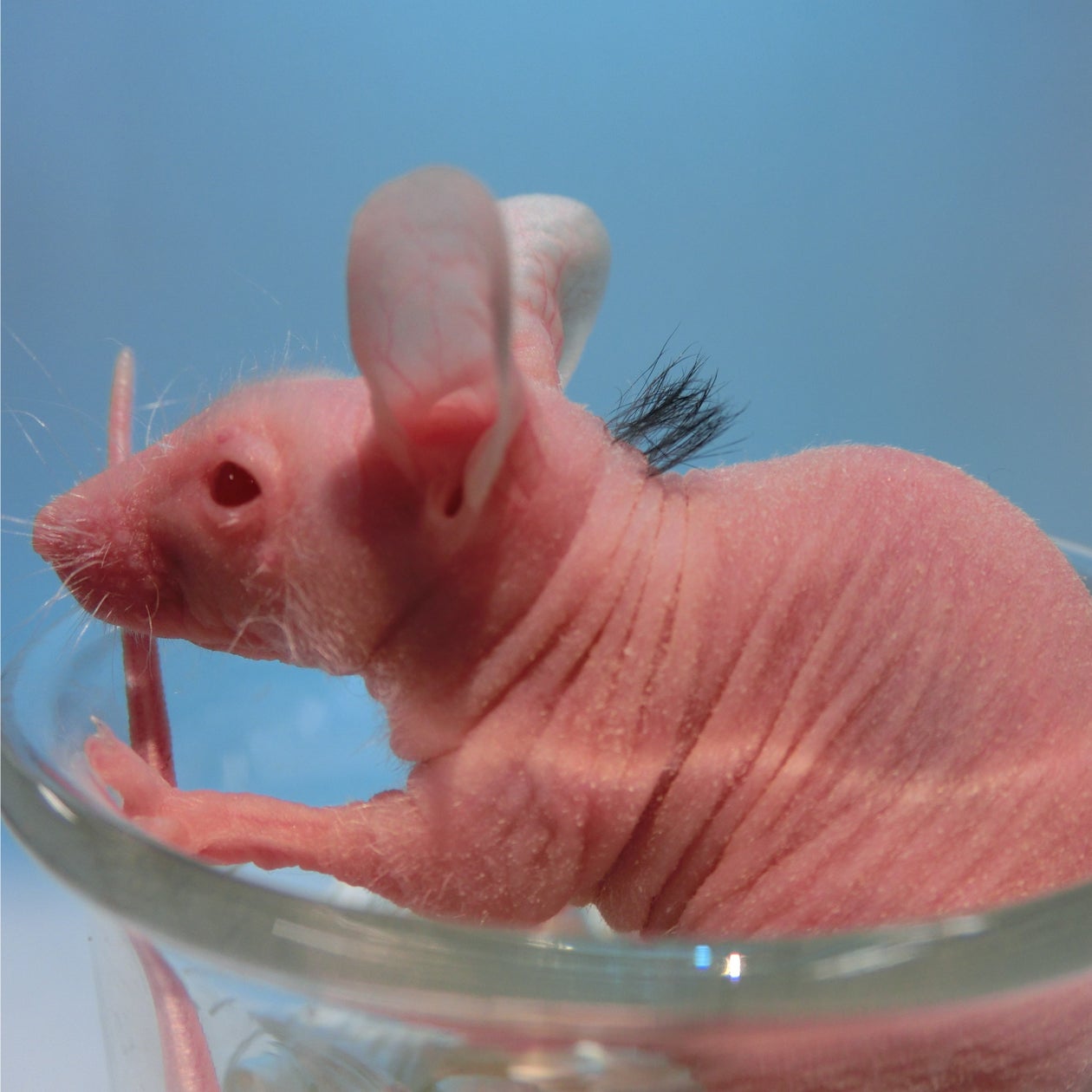
Research by Takashi Tsuji of RIKEN BDR and Masayo Takahashi—formerly at RIKEN and now an external collaborator at Kobe City Eye Hospital—is closer to real-world applications. Tsuji’s team has developed a groundbreaking method, called the organ germ method, which uses organ-inducing epithelial and mesenchymal stem cells to replicate organogenesis, which is the growth and differentiation of tissues into organs during embryo development. In mice, his team has succeeded using this method to regenerate fully functional teeth, hair follicles and the salivary and lacrimal glands.

Using pluripotent stem cells, Tsuji’s team has also generated organoids of the pituitary gland, salivary gland and 3D integumentary system, a skin system that includes hair follicles and sebaceous glands. He is now focusing on bringing the functional regeneration of teeth and hair follicles to world-first human clinical trials.
 

Joxy

Experienced Member
Reaction score
519

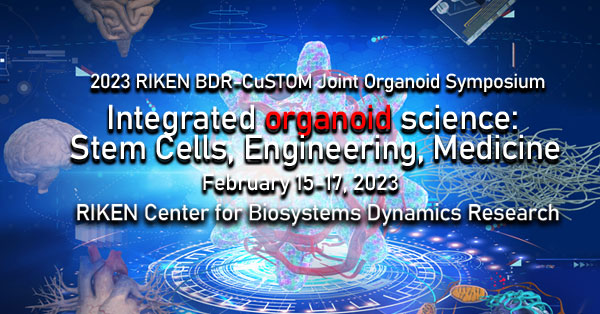
Organizer: Mitsuru Morimoto, Minoru Takasato, Takashi Tsuji (RIKEN BDR, Japan)
Takanori Takebe, James M. Wells, Aaron M. Zorn (CuSTOM, Cincinnati Children's Hospital Medical Center, USA)
 

Joxy

Experienced Member
Reaction score
519
Great news from Dr. Takashi Tsuji!


The name of the new company and new website:


The new company will get investments and funding from Kobayashi Ltd:


kiwi666

Senior Member
My Regimen
Reaction score
892
Great news from Dr. Takashi Tsuji!


The name of the new company and new website:


The new company will get investments and funding from Kobayashi Ltd:

They happily receive money to do “research” until the day they die. He’s not actually ever going to launch anything…. Right guys?
 

badnewsbearer

Established Member
My Regimen
Reaction score
179
They happily receive money to do “research” until the day they die. He’s not actually ever going to launch anything…. Right guys?
yes bwtter start without the preclinical studies and then fail in clinical studies to delay another decade and waste a few millions. great
 

Joxy

Experienced Member
Reaction score
519
yes bwtter start without the preclinical studies and then fail in clinical studies to delay another decade and waste a few millions. great
They finished the preclinical safety trials and got approved by japanese FDA to start clinical trials 2 years ago. If everything goes right the clinical trials will start in 2024, which is the closest that we can get for hair cloning anywhere in the world.

I am just little confuse here, because I don’t see Dr. Takashi Tsuji name on their official website. Dr. Tsuji protected all his patents under his name or RIKEN, so I guess he is involved as the main science advisor. Just like Alexey is in Stemson.
 

Ralph Wiggum

Established Member
My Regimen
Reaction score
174

Joxy

Experienced Member
Reaction score
519

After ending its partnership with Riken and Dr. Takashi Tsuji in 2021, Organ Technologies is back. It is renaming itself to Organtech. Moreover, they plan to start hair regeneration related clinical trials in 2024
This guy or blog is totally wrong.

Dr. Takashi Tsuji and RIKEN BDR are founders and owners of OrganTech. Next month they should close another round of funding if they win the prize for innovative technology.


badnewsbearer

Established Member
My Regimen
Reaction score
179
the question is, how will they make sure that the cloned dermal papilla cells do not die in the new aptotic environment in the frontal scalp. when doing a hair transplant the DPs from the back are extracted with the entire follicle so also with the mesenchyme dermal stem cells and progenitors for the dermal papilla cells that all have seemingly a methylated(down regulated) androgen receptor gene. however, in environment of high DHT like the frontal scalp even a lower AR expression can lead to minaturization(e.g hair transplant goes to sh*t without finasteride for young men even the transplanted donor hair will thin in the high androgen front) and additionally lots of death signals like tgfb and IL-6 in this area.

so I wonder, if they extract the dermal papilla cells and culture them to form an organoid, the dermal sheath must also arise from this and it must have the same properties as the occipital follicles otherwise you need an anti androgen. I can see tsuij doing this because they actually culture dermal papilla cells, however for stemson I dont know what the expression profile of their DP cells is like.

I guess you could edit the genes in vitro however you like and probably push the cells to not express certain genes like AR or SDR5A1/2/3.

thats the only way you can make them androgen resistant. however I wonder if that would bring additional hurdles as this could classify as gene therapy? not just cloning of an organ but making epigenetic changes to it? it seems its not really clear regulatory wise how this would be judged


I think the fact that the cloned hairs in mice from human mesenchyme showed proper cycling suggests that they can also regenerate the dermal sheath. as the dermal papilla cells regenerate from their progenitors in the dermal sheath, if the DS was damaged, the hair would disintegrate after a few cycles because DP cells themselves have been observed to not really proliferate and rely on the stem cell pool from the DS). tsujis approach the AR sensitivity could then be straight forward, if the AR expression during culture does not change it should be as resistant as transplanted hairs. these also thin over time but much slower
 
Last edited:

Trichosan

Senior Member
My Regimen
Reaction score
1,327
I thought Messiah Tsuji was rolling this out to market by 2020. Despite COVID occurrence, there were only more supposed roadblocks. I wouldn't expect to see much more than "research in progress" by 2026 year's end.
 
Top